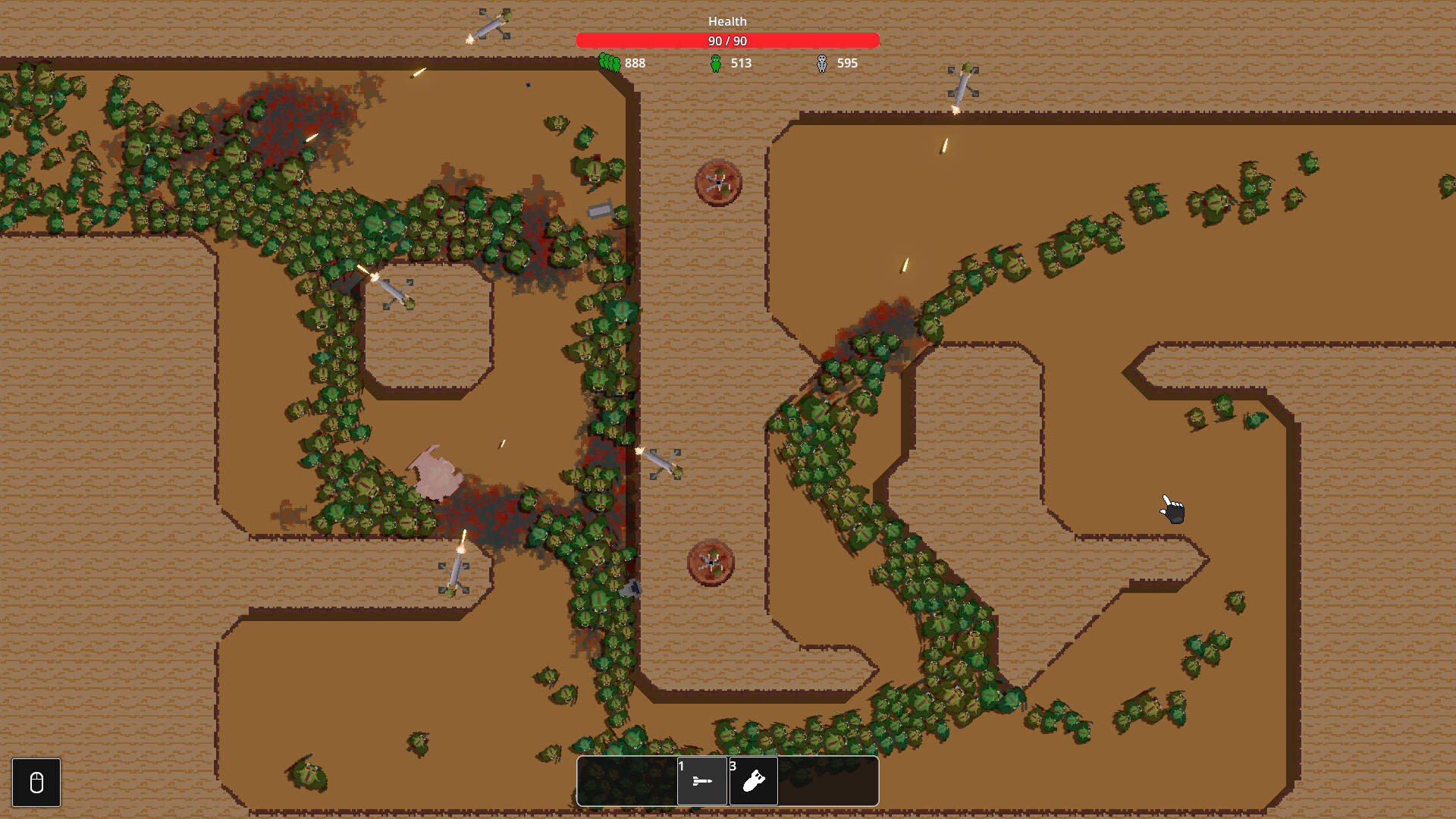
Fast answer: select a placed tower before adjusting it. Dragging changes its position or firing direction, while right-click is the commonly reported delete interaction. Check the in-game prompt before committing because input behavior can change between builds.
Controls players commonly miss
| Task | Input / method | Why it matters |
|---|---|---|
| Re-aim a tower | Select it, then drag its target or spread control | Towers sweep an area instead of automatically locking onto one orc. |
| Move a placed tower | Select and drag the tower | Useful when a firing lane is missing the densest part of the horde. |
| Delete a tower | Right-click the selected/placed tower | Correct a bad placement without treating the run as permanently ruined. |
| Move the camera | WASD or arrow keys; edge scrolling may be available in Options | Lets you inspect routes and the upgrade tree without relying only on zoom. |
| Start the attack | Use the on-screen battle control; Space is reported by current guides | Confirm every firing arc before releasing the horde. |
Build boundary
The developer explicitly added adjustable tower spread, WASD/arrow camera control and optional edge scrolling during the May playtest. The current Steam release does not publish a complete official keyboard map, so the in-game prompt is the final authority if an input differs.
Before starting a wave
- Trace the lane. Identify where the crowd compresses and where a small leak can bypass the main defense.
- Check every firing arc. A strong tower pointed across empty ground is still a weak placement.
- Stagger coverage. Do not let every sweep leave the same lane uncovered at the same moment.
- Reserve cleanup. Keep rear coverage or an active ability for the few orcs that escape the kill zone.
Why the towers feel different
Reddit discussion repeatedly compares the horde to a liquid. Your job is to shape where that flow spends time. The firing arc is therefore part of the build: move or rotate the tower until its sweep crosses the packed lane, rather than waiting for it to behave like a conventional target-locking turret.